What's the deal with Australian climate politics?
In this episode, activist Miriam Lyons gives an overview of Australian climate policy past, present, and future.
(PDF transcript)
(Active transcript)
Text transcript:
David Roberts
G’day mates! As you all know, I’m in Australia at the moment, on a whirlwind speaking/listening tour regarding this country’s response to the Inflation Reduction Act.
I’ve been learning a ton about Australia’s history with climate policy, its clean-energy resources, and its current politics. It’s all much more complex and interesting than I appreciated before coming, so I thought it would be cool to record a podcast “in the field,” while I’m here, with someone who could provide an overview of all that stuff.
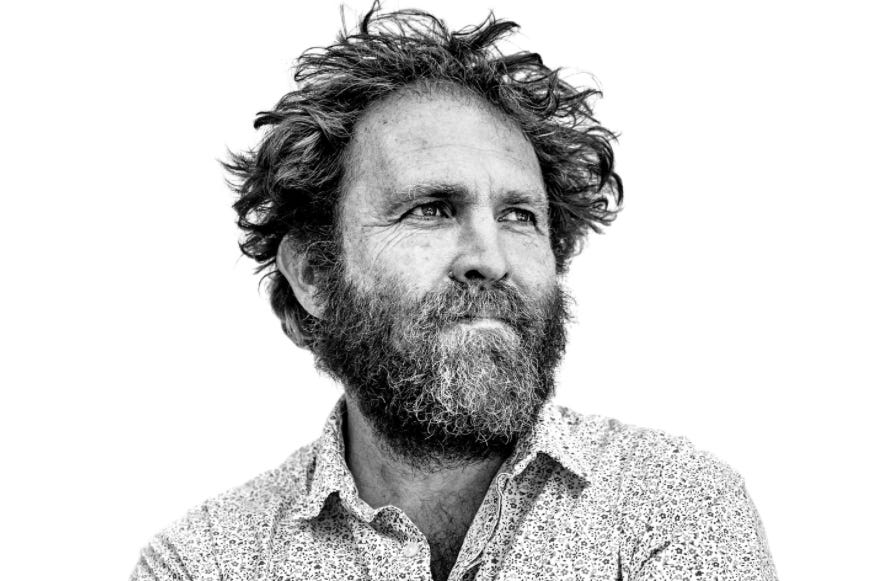
To my great delight, I was joined — live! in studio! — by Miriam Lyons. Lyons’ resume is … daunting. She founded a progressive think tank called the Centre for Policy Development and led it for seven years; she led the climate justice campaign at GetUp, the Australian equivalent of Moveon.org; she has written or co-written two books on economics and the clean-energy transition; and currently, she is director of the Australian Economic Transformation program at the Sunrise Project, which works to scale social movements and accelerate the transition.
Needless to say, she is quite familiar with the ins and outs of Australian climate politics! We had a fascinating and wide-ranging discussion. Enjoy.
So, Miriam Lyons. Welcome to Volts. Thanks so much for coming.
Miriam Lyons
Thank you so much. Very excited to be on the pod.
David Roberts
This is excellent. Oh, also, Volts listeners might be excited to know that this is the first Volts that I've ever recorded in person in the same room with my guests. That's exciting too. I know usually I'm a hermit at home, so this is cool. I would like to do more of it. Okay, so let's start then with a little bit of capsule history. I think the Volts audience is aware of the agita of climate politics in the US. From sort of Waxman-Markey era of 2009, 2010, all the way through the turbulence, et cetera, through IRA.
So let's talk a bit, a little bit about what's been happening in Australia during that same time period. Give us a sort of summary of the history.
Miriam Lyons
I've been thinking about how to sum up all of Australian climate politics really briefly. Okay, so in a galaxy far, far away. A colonized country was sitting on one of the world's biggest carbon bombs, and what happened next is an epic tale of triumph and betrayal. I think the TL;DR version is that we are one of the world's biggest exporters of climate pollution. We are also the sunniest continent on Earth and one of the windiest. So we have this enormous potential to be a massive exporter of climate solutions. And we're currently hitting our crossroads, which is that moment where we decide whether we want to be a Kodak country that is so attached to its old technology that it's failing to notice —
David Roberts
Oh, that Kodak. For the minute. I had the bear in my head. I was like, wait, what's the bear analogy? Oh, and the photograph analogy.
Miriam Lyons
Yeah, that one. It's just like, oh, there's all this sun and wind. What could we possibly do instead of killing the world with our coal and gas exports? So that informs a whole lot of the history of our climate politics, of course. And our fossil fuel lobby have been experts in using their enormous profits to win friends and influence policy and more importantly, to bully politicians when they don't get their way. And that playbook has worked really well for them for quite a long time, but it is now running out of oomph. And I think, you know, a big question now is whether our major parties will