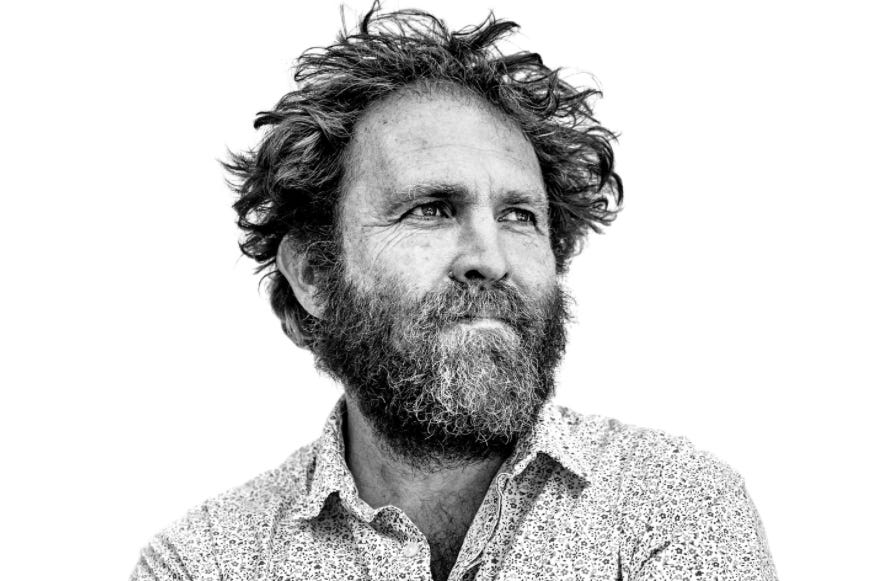
Volts podcast: the challenges of building transmission in the US, and how to overcome them, with Liza Reed
The US is nowhere close to being able to build the amount of long-distance power lines it will need for a clean energy transition. In this episode, electricity transmission expert Liza Reed breaks down the many problems with the current dysfunctional system, and what it will take to build up the needed infrastructure.
(PDF transcript)
(Active transcript)
Text transcript:
David Roberts
Electricity transmission has been having a moment lately, getting more attention from analysts and policymakers than it has in … well, at least in my lifetime.
There's good reason for this: every single model of deep decarbonization shows that, to get there, the US will need lots, lots more long-distance high-voltage power lines, to carry renewable energy from the remote areas where it is concentrated to the urban load centers where it is needed.
The problem is, the current system for planning and building those long-distance power lines is utterly dysfunctional, at every level, which means they aren't getting built. The US will not decarbonize on time or on budget unless it can figure this out.
It's a thorny, complicated subject — not just understanding all the flaws in the current process, but figuring out how to move forward with solutions. Loyal Volts subscribers will recall that I wrote a five-part series on these issues earlier this year, but if you're looking for a more compact & polished version, I highly recommend a newly released report, jointly produced by the Niskanen Center & the Clean Air Task Force, called, "How are we going to build all that clean energy infrastructure?"
The report emerged from a workshop held with a variety of professionals across the industry and serves as a plain-language summary of the problems facing transmission in the US today and the candidate solutions. It's remarkably readable, even for non-nerds — I recommend checking it out.
To walk through those problems and possible solutions, I'm excited to have as my guest today Liza Reed, the Research Manager for Low Carbon Technology Policy at Niskanen. Reed completed and defended a dissertation on these issues just a few years ago and has been a crucial help to me in parsing through them, so I'm thrilled she's joining me today, so that Volts listeners can also benefit. Liza Reed, welcome to Volts.
Liza Reed
Thank you so much. It's wonderful to be here.
David Roberts
So the Niskanen Center has just come out with this report about transmission and its many challenges. So I thought the best way to structure the conversation would be to kind of walk through the report a little bit. But first, sort of by way of context, tell us, what is the transmission challenge in the United States? What are the decarbonization models telling us about what we need?
Liza Reed
The challenge is that we don't have enough transmission and that we need more transmission.
David Roberts
Pretty simple.
Liza Reed
Yep, it's that simple.
Liza Reed
And we don't have the right mechanisms in place to get the kind of transmission that we need.
David Roberts
But when we say need more relative to what we have, are we talking like a 20% increase, doubling, tripling? Give us a ballpark figure.
Liza Reed
There's sort of a range of estimates that come out of reports, but generally in the double to triple in the capacity is what we're seeing coming out of these decarbonization reports. So that's in the gigawatt miles, is so