What's going on with offshore wind?
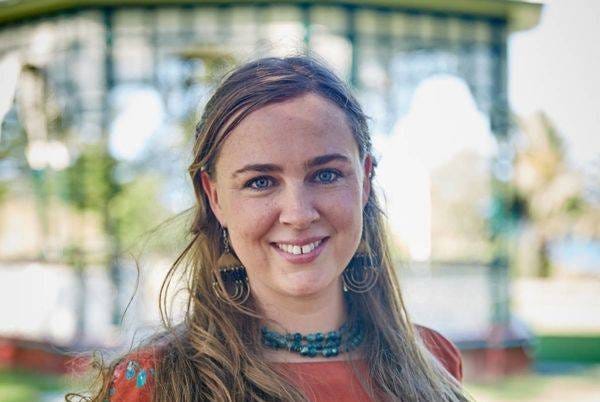
In this episode, wind industry analyst Samantha Woodworth speaks to the growing pains of the offshore wind industry and what its future may hold.
(PDF transcript)
(Active transcript)
Text transcript:
David Roberts
Last week, for the first time ever, a commercial offshore wind farm delivered power to the US grid. It was an important milestone — and also the rare bit of good news for an otherwise beleaguered industry. Everywhere else, costs are up, contracts are being renegotiated, and projects are getting canceled. It all sounds pretty bad, especially for a sector that barely even exists yet.
What’s going on? How much of this turmoil is temporary and how much reflects lasting structural changes? Is the US offshore wind industry going to die before it even leaves its crib?
To gain a little clarity on these questions, I contacted Samantha Woodworth, a senior wind industry analyst at Wood Mackenzie. We talked about the converging difficulties facing the industry right now, efforts to renegotiate contracts that were signed in the Before Times, the odd role that ships play in the whole mess, and the industry's prospects in coming years and decades.
Samantha Woodworth, welcome to Volts. Thank you so much for coming.
Samantha Woodworth
Well, thank you so much for having me. I'm happy to be here.
David Roberts
This is exciting. I have 411,000 questions. The more I dig, the more questions I have. So I'm excited to get into this. It seems like we're really at a hinge point here for offshore wind in the U.S., and there's lots of sort of contradictory signals happening. On the one hand, literally today, the day we're recording, we heard that the first power from an offshore wind turbine is being delivered in New York today. So I think, unless, correct me if I'm wrong, that marks the first actual power from offshore wind being used in the U.S.
Is that correct?
Samantha Woodworth
Essentially, yeah. I mean, it's the first commercial-scale offshore wind farm in the U.S. flowing power to the grid. It is a super-duper exciting day.
David Roberts
Yeah, that is exciting. And also, I think just a couple of days ago or maybe yesterday or very recently, there were some announcements of new offshore wind procurement. But then on the other hand, we have all these other stories coming. So let me just, in terms of the quote unquote crisis of U.S. offshore wind, let me summarize quickly what it seems like what I've gathered is going on, and you can fill in the details and tell me if I'm missing anything.
Samantha Woodworth
Absolutely.
David Roberts
Basically, a bunch of contracts were signed for offshore wind amidst a period of great enthusiasm in the Before Times, like pre-2019, back when things were normal, I don't know.
Samantha Woodworth
Yeah.
David Roberts
Were they normal?
Samantha Woodworth
More or less.
David Roberts
What's normal? But economic circumstances, let's say, were a lot better back then. So you sign these contracts, you sign up, and these projects take a long time to build. So in between the signing and today, we've had a pandemic. Inflation. Russia invaded Ukraine and screwed up the entire globe's supply chains. Now everything looks much, much, much more expensive than it did then. And so now these wind companies are stuck with these contracts premised on much lower prices, much lower inflation, much lower interest rates, et cetera, et cetera. And they're sort of scrambling.
Some of them are getting canceled, they're trying to renegotiate, et cetera, et cetera. Is that roughly accurate as a summary?
Samantha Woodworth
Yeah, yeah, definitely the sh