Reflecting on the work of the soon-to-retire House climate committee
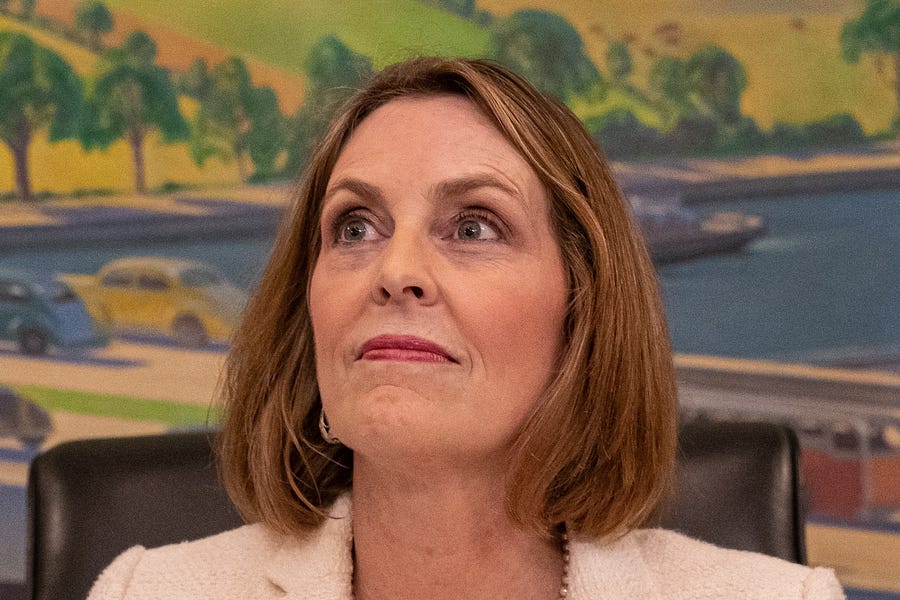
In this episode, Florida Rep. Kathy Castor, chair of the House Select Committee on the Climate Crisis, describes the committee’s ambitious goals and notable achievements over the past three years.
(PDF transcript)
(Active transcript)
Text transcript:
David Roberts
In 2019, in the wake of Democrats’ congressional victories, House Speaker Nancy Pelosi announced that she would be re-forming the Select Committee on the Climate Crisis, which had been disbanded by Republicans in the previous session. She appointed Florida Representative Kathy Castor as chair.
At the time, the decision caused considerable controversy in the climate community. Climate activists were pushing for a more ambitious committee, with the power to write a full Green New Deal legislative package. Instead, the committee was to be an advisory body only, meant to do research and develop policy suggestions.
History is littered with congressional committees that busily produce reports and whitepapers that no one reads. But the climate committee proved much more potent than that.
Castor set about gathering testimony from hundreds of witnesses — scientists, policy wonks, and average citizens alike — and putting her expert staff to work translating their testimony into policy recommendations. But the recommendations did not simply decorate reports. The Democrats on the committee, and the Democrats educated by the committee's work, took those recommendations back to their own committees, where they found their way into a wide variety of bills. The bipartisan infrastructure bill, the CHIPS Act, and the Inflation Reduction Act contained numerous policies that originated in the climate committee.
Altogether, hundreds of the recommendations made by the committee found their way into law — a crazy-high success rate for a committee with no real power. As the committee prepares to sunset — of course Republicans are disbanding it again — it has put out a final report, summarizing all its achievements and pointing to the work that remains to be done.
I called Rep. Castor to get her thoughts on the committee's work, the achievements she is most proud of, and what progress she thinks can be made in the next two years.
Alright, then. With no further ado, Representative Kathy Castor. Welcome to Volts. Thank you so much for coming.
Rep. Kathy Castor
Oh, I'm delighted to be here, David. Thank you.
David Roberts
So just to start off, I'm assuming that the coming Republican majority is going to shut down the committee. Has this been explicitly stated yet, or is this just ... are we all assuming? Is that a valid assumption?
Rep. Kathy Castor
Yeah, the ranking member, Garret Graves of Louisiana, did kind of spill the beans. The problem is, on the Republican side, the Speaker-to-be, Kevin McCarthy, does not quite have the votes yet. So that leaves everything in limbo getting organized for the new year. But, they've made it plain that the climate crisis is not a priority for them, and therefore the Select Committee on the Climate Crisis will not exist in the next Congress.
David Roberts
So then it's been wrapped up. It's been a whirlwind three years, I guess, since you were placed in charge of this committee. Have you had a chance to kind of pause and step back and think about it all, or are you still kind of in a sprint til' the end of the term?
Rep. Kathy Castor
It has been a sprint right til' the end, especially since the large appropriations package and the defense bill were not completed due to really foot-dragging of the US Senate. We have so much more left to do. I mean, we are thrilled that this was the most important Congress when it comes to clean energy and climate action and building more resilient, safer communities across the country. I mean, this was the Congress,