Putting more climate philanthropy toward economic and racial justice
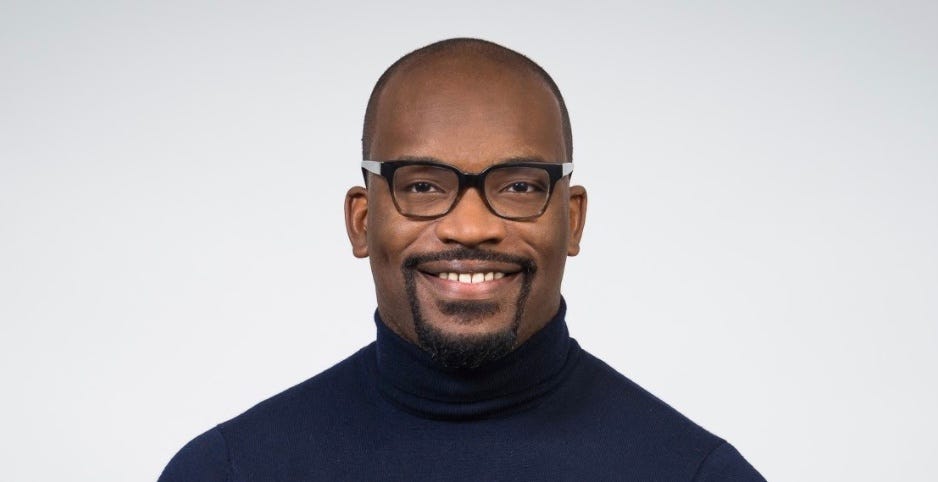
BIPOC communities are most likely to bear the effects of climate change, but BIPOC-led environmental justice groups are severely underfunded in climate philanthropy. In this episode, Abdul Dosunmu of the Climate Funders Justice Pledge talks about his group’s aim to challenge big donors to give more equitably.
(PDF transcript)
(Active transcript)
Text transcript:
David Roberts
Whether it’s suffering the effects of fossil fuel pollution or fighting back against it, black, indigenous, and people of color (BIPOC) are on the front lines of climate change.
Yet they are starved for resources. More than a billion dollars a year goes toward climate philanthropy, but of that amount, little more than 1 percent goes to BIPOC-led environmental justice groups.
The two-year-old Climate Funders Justice Pledge, run by the Donors of Color Network, is trying to change that. It challenges big donors to a) be more transparent about where their grants are going, and b) within two years of signing the pledge, raise the amount going to BIPOC-led groups to 30 percent.
The pledge, featured in a just-released report from Morgan Stanley and the Aspen Institute on how to increase the impact of climate philanthropy, has already led to more than $100 million in annual commitments to BIPOC-led groups.
I talked with Abdul Dosunmu, who runs the pledge campaign, about why BIPOC leadership is important to the climate fight, how transparency changes the behavior of foundations, and how to improve the relationship between environmental justice groups and big funders.
Alright. Abdul Dosunmu. Welcome to Volts. Thank you so much for coming.
Abdul Dosunmu
Thank you so much for having me.
David Roberts
This is an interesting topic to me with lots of ins and outs, but let's start with just, I'd like to get a sense of what is the pool of philanthropic money available to climate and environmental organizations? And then how much of that currently is going to EJ groups?
Abdul Dosunmu
The Morgan Stanley-Aspen report, that we were honored to be part of, and was just released really details a stark challenge in terms of what the author of the report, Randall Kempner, says is both the quantity of climate philanthropy and the quality of climate philanthropy. So, on the quantity side, according to the report, only about 2% of all global philanthropy is focused on climate.
David Roberts
That's wild to begin with, honestly.
Abdul Dosunmu
Insanely wild. And what's interesting about that, what's hard to square about that is the fact that if you ask philanthropists how urgent the crisis is, 85% of them say it's extremely urgent. So they're talking one game but walking another game.
David Roberts
Right.
Abdul Dosunmu
So, of all global philanthropy, only about 2% is focused on climate. And then of that 2%, only about 1.3% of it is focused on BIPOC-led environmental justice organizations. So if you think about the quantity versus quality framework that Randall has, the Morgan Stanley-Aspen report is really focused on the quantity side of it. The climate funders justice pledge, which I lead, is focused on the quality side of it.
David Roberts
Right. We'll get to that in just one second. I got a bunch of questions about that, but I just want to in terms of quantity, do we know that 2% that goes to climate related stuff. Do we know what that number is? I don't have any sense of scale at all.
David Roberts
Is that a billion dollars? A few million?
Abdul Dosunmu
So our data, and I'm not sure Randa