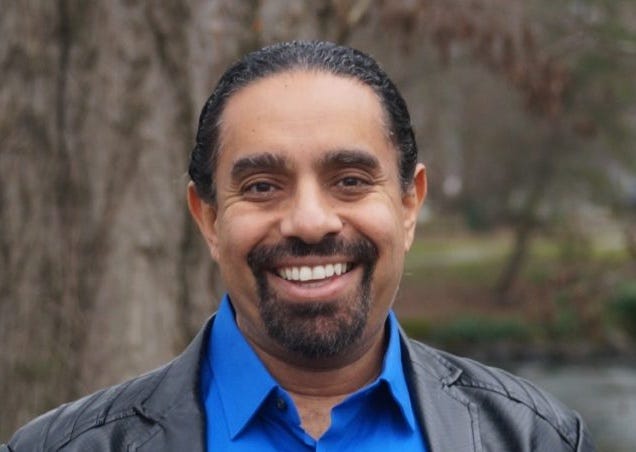
How can AI help with climate change?
In this episode, Priya Donti, executive director of nonprofit Climate Change AI, speaks to how artificial intelligence and machine learning are affecting the fight against climate change.
(PDF transcript)
(Active transcript)
Text transcript:
David Roberts
As you might have noticed, the world is in the midst of a massive wave of hype about artificial intelligence (AI) and machine learning (ML) — hype tinged with no small amount of terror.
Here at Volts, though, we’re less worried about theoretical machines that gain sentience and decide to wipe out humanity than we are with the actually existing apocalypse of climate change.
Are AI and ML helping in the climate fight, or hurting? Are they generating substantial greenhouse gas emissions on their own? Are they helping to discover and exploit more fossil fuels? Are they unlocking fantastic capabilities that might one day revolutionize climate models or the electricity grid?
Yes! They are doing all those things. To try to wrap my head around the extent of their current carbon emissions, the ways they are hurting and helping the climate fight, and how policy might channel them in a positive direction, I contact Priya Donti, an assistant professor at MIT and executive director of Climate Change AI, a nonprofit that investigates these very questions.
All right, then, with no further ado, Priya Donti, welcome to Volts. Thank you so much for coming.
Priya Donti
Thanks for having me on.
David Roberts
We are going to discuss the effects of artificial intelligence and machine learning on the climate fight. And I think we're going to, for reasons that will become clear as we talk, kind of like taking on an impossible task here. As we'll see, it's going to be very difficult to sort of wrap our heads around the whole thing. But I think we can make a lot of progress and maybe get clear about sort of some of the directions and some of the applications and get a better sense of how things are going, because this is something I've been sort of meaning to think about and talk about for a while.
I'm excited. But to start, can we just get some definitions out of the way? Because I think people hear a lot of these terms flying around. There's artificial intelligence, AI. There's machine learning, ML, in the business, and then there's just sort of the digitization of everything, and then there's just sort of more powerful computers. Like, if I'm running a climate model and I want to put more variables in there, but I'm constrained by the amount of computing power it would take, computers that have more power and more processing cores or whatever, then I can do that.
So help us understand the distinction between these things, between just sort of more and better and faster computing and something called machine learning and something called artificial intelligence. What do all these things mean?
Priya Donti
Yeah, so I'm going to start with AI: Artificial intelligence. So AI refers to any computational algorithm that can perform a task that we think of as complex so this is things like speech or reasoning or forecasting or something like that. And AI has two kind of main branches. One of them is based on rule-based approaches where you basically write down a set of rules and ask an algorithm to reason over them. So when, for example, Deep Blue beat Gary Kasparov in the game of chess, this was a kind of rule-based scenario where you were able to write down the rules of chess and get an algorithm to understand and reason over what to do given that set of rules. Of course, there are lots of scenarios in the world where it's really difficult to write down a set of rules to capture a task, even though we kind of know how the task goes.
David Roberts
Most you could say are difficult.
Priya Donti
Exa