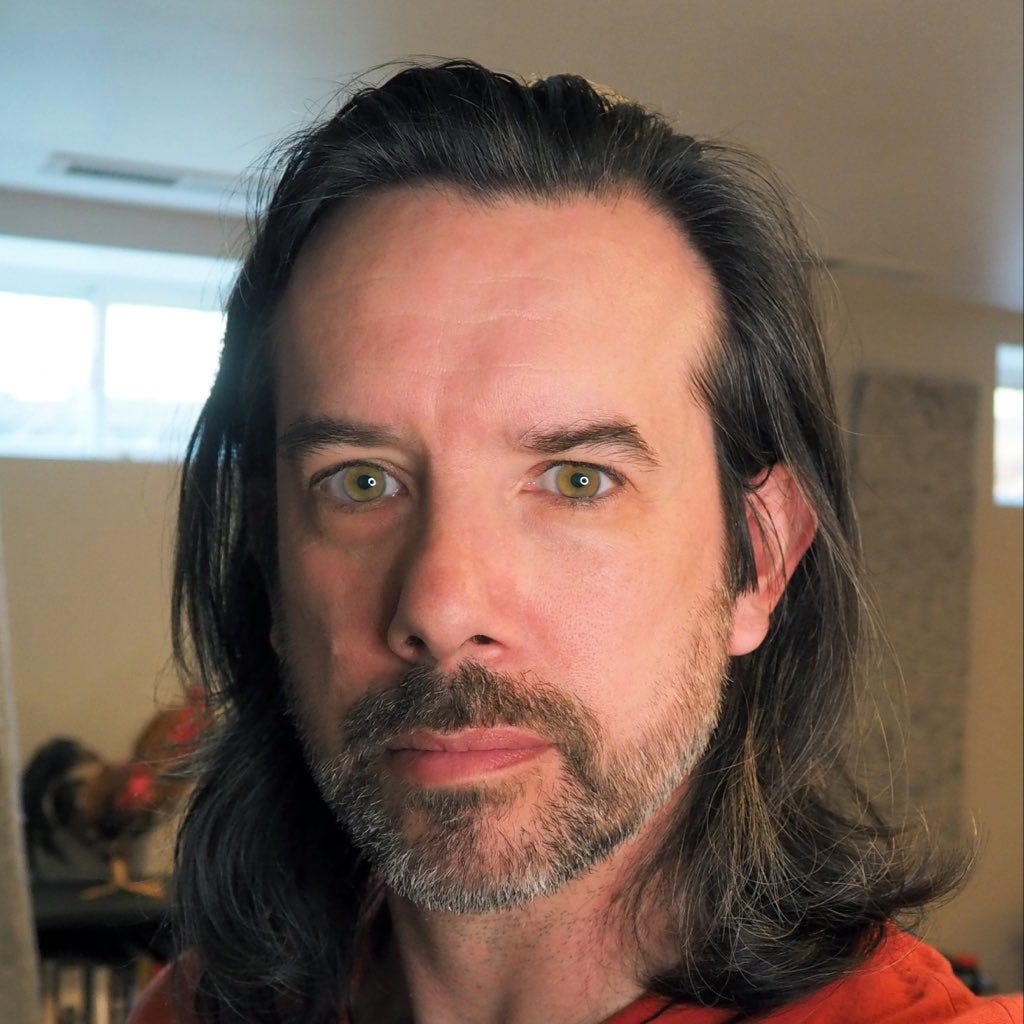
Volts podcast: Will Wilkinson on libertarianism, pluralism, and America's political crisis
I have been reading Will Wilkinson’s writing since I was a baby blogger, way back in the early 2000s. By then, I had already left behind the libertarianism that gripped me in college, but Will was still a professional libertarian at the Cato Institute. I disagreed with him about many things, but I always found him rigorous and engaging.
Over the years, I’ve followed as he’s moved from Cato to the center-right Niskanen Center (where he got canceled) to, now, the Progressive Policy Institute, where he is a senior fellow. In the process he left behind libertarianism for “liberaltarianism” and now some some kind of synthesis that doesn’t quite have a name but lands in the vicinity of social democrat, with an emphasis on small-d democracy.
And of course, like everyone who’s anyone, he has his own newsletter: Model Citizen.
There’s something nice about following a mind you admire as it tries to work its way toward higher and better understanding — it is so rare these days to witness anyone change their minds about anything — and there’s something especially nice when it ends up converging with your own thinking. I feel much more confident about things I believe when Will articulates them.
Both Will and I have come to spend less time thinking about what might be the correct or optimal political philosophy and more time thinking about the workaday challenges of pluralism and democracy: how people of different cultures, ethnicities, genders, beliefs, and personalities, whose disagreements and conflicts are unlikely ever to be entirely resolved, can live together in relative peace.
All of which is to say, I’ve wanted to talk politics with Will forever. We got around to it a few weeks ago and now I’ve finally got the thing produced. If you're in the mood for almost two hours of nerdy talk about Ayn Rand, rationalism, freedom, social insurance, the relationship between markets and government, and the perils of pluralism, strap on those headphones and travel along.
(Note: several times in the pod I say “non-zero” when I mean “non–zero sum,” which bugs me now, but what can you do.)
VOLTS
D: Hello, welcome to volts. I am your host, David Roberts. Today I'm excited, as I have as a guest Will Wilkinson who is currently a senior scholar at the Progressive Policy Institute, which is sure to be of some amusement to those who have followed Will's career which began at the extremely different Cato Institute. So rather than try to explain Will’s whole history, which we're going to get into, I'll just say that I've been reading Will’s work for years now, and have been following his intellectual and political journey that he's been on, which has paralleled my own in a lot of ways. And so I thought I would talk with him about that journey, and about where he's ended up, and how we move forward in American politics from now. So we're taking on all the big questions today. So thanks for coming, Will, we appreciate you being on.
WW: Thanks, Dave. I'm ready.
DR: So before getting into the meat of things, just start by telling us a little bit about where you're from and how the story of Will Wilkinson that ended with you being a young, teenage Ayn Rand enthusiast, what's the what's the origin story?
WW: Well, I was born the child of a poor sharecropper. Just kidding. That's, yeah, that's The Jerk. which describes me pretty well.
I grew up in a little town in the middle of Iowa - Marshall town - it’s a small city of about 27,000 people. It's the county seat. So that makes it locally important. And it's exactly the same size as it was when I grew up there, which is interesting, because the composition of the population is very different today, but I moved there when I was five, because my dad had taken a job as the chief of police. So my entire childhood my dad was the


